


Most first-time founders often build a product too early and think the biggest challenge is execution, but it’s not. It’s actually a direction.
The real challenge is building the right thing in the first place.
A lot of early-stage founders move too quickly from idea to development. They rush into logos, wireframes, features, and hiring developers before fully understanding the actual problem they are trying to solve. The result is usually the same: wasted time, wasted money, and a product nobody really needs.
The truth is, most failed products are not technical failures. They are direction failures.
Why first-time founders build products too early

There’s a certain excitement that comes with having a startup idea.
You start imagining:
- – the app
- – the website
- – the features
- – the future users
- – the growth
And because building feels productive, many founders assume development should happen immediately. But early excitement can create a dangerous illusion.
If I build it fast enough, people will come.
Unfortunately, that is rarely how products succeed. The first version of your product should not be built to impress people. It should be built to learn.
Most founders start with features instead of problems.
One of the most common mistakes first-time founders make is starting with features.
They ask:
- – Should the app have messaging?
- – Should users be able to upload files?
- – Should there be AI integration?
- – Should we launch iOS and Android?
But the more important question is:
What exact problem are we solving?
If the problem is unclear, the product becomes unclear too. This is why many first-time founders build a product without first validating the problem.
Strong products are usually simple in the beginning because they focus deeply on solving one important problem well. Weak products try to solve everything at once.
The goal of a first product is not complexity; the goal is clarity.
Your First Version Is Not Your Final Product.
A lot of founders secretly expect version one to be the “real thing“.
That mindset creates unnecessary pressure, too many features, delayed launches, endless revisions, and expensive development cycles.
But the first version of a product is simply a test. It exists to answer important questions: Do people actually care about this problem? Will users engage with the solution? Which features matter most, and which assumptions are wrong?
The earlier you learn these things, the better your product becomes.
Trying to perfect version one usually slows down the learning process.
Validation Is More Important Than Perfection.
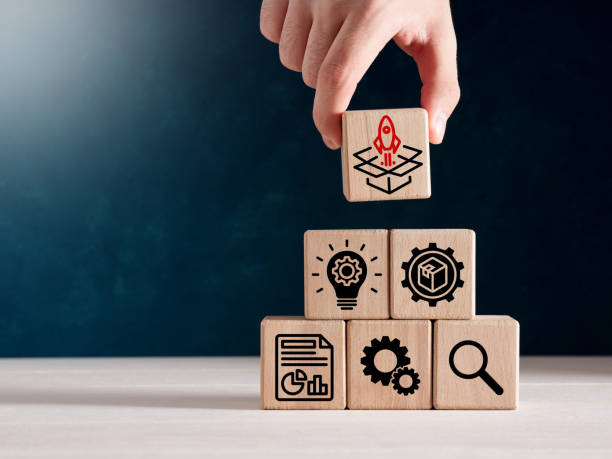
One of the hardest truths in product building is this: nobody is automatically waiting for your product.
A good idea in your head does not automatically become a good business in the market. That is why validation matters so much.
Before building heavily, founders should spend time talking to potential users, understanding frustrations, testing assumptions, and identifying recurring pain points.
The best products usually come from a deep understanding, not random inspiration.
Sometimes founders build products based on what sounds exciting instead of what people actually need, and that mistake becomes expensive very quickly.
Technical Development Cannot Fix Poor Direction
Many founders believe hiring a strong developer or agency will solve product uncertainty, but it won’t.
Development can only execute direction. It cannot create clarity where none exists.
If the product idea is weak, unclear, or poorly validated, even excellent development will struggle to create meaningful results.
This is why strategy matters before development. Founders need clarity around the product, the audience, the priorities, and the overall direction before writing code.
Without those things, teams end up building blindly.
What Founders Should Do Instead

Instead of rushing into development, early-stage founders should slow down and answer foundational questions first. What exact problem exists? Who experiences it most? How are people currently solving it, and why would they switch to this solution?
Most importantly, what is the simplest version of the product that can be tested?
This process may feel slower at first, but it saves enormous time, money, and confusion later. Many successful products started with surprisingly small first versions.
Not because the founders lacked ambition, but because they understood something important: focused products learn faster.
Smaller products launch faster, get feedback earlier, and make iteration easier. They also reduce unnecessary costs and help teams make better decisions earlier in the process.
Most first-time founders do not fail because they are incapable. They fail because they build before they fully understand what needs to be built.
There is a difference between having an idea and having product direction. The earlier founders learn that difference, the better their chances of building something people genuinely want.
That is how many first-time founders build a product before they fully understand what they are creating.
Before development starts, clarity should come first, because building the wrong thing perfectly is still building the wrong thing.
This is exactly where Angelose Global comes in.
Before we write a single line of code for any client, we sit down and work through the hard questions first: What problem are we actually solving? Who has it? And what is the simplest version of a solution worth building? We call it Discovery and Strategy, and it exists because we have seen too many times what happens when founders skip it.
If you have an idea you are excited about but are not yet sure whether you are building in the right direction, that is exactly the right time to reach out. Not after development has started but now.
Book a free 30-minute consultation with us, and let’s make sure you are building the right thing before you commit to building it at all.