

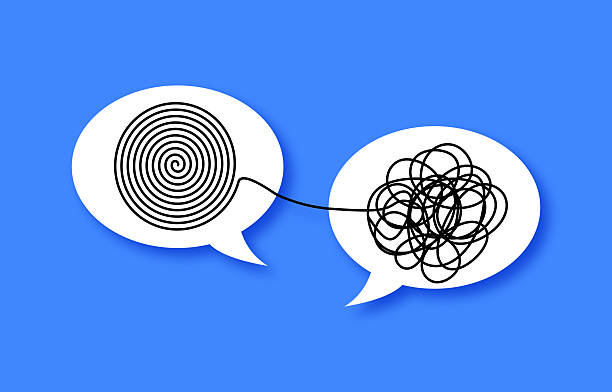
Running your business manually often creates hidden operational problems that are not immediately visible. Many businesses do not realise they have an operations problem because things still appear to be working.
Orders are being processed. Customers are being served. Payments are coming in. The team is busy. From the outside, everything looks fine.
But beneath the surface, a lot of businesses are quietly running on manual processes that consume time, create unnecessary risk, and make growth far harder than it needs to be. The problem is that these costs rarely show up anywhere obvious. They do not appear as a line item on a financial report. Instead, they show up as delayed responses, duplicated work, missed opportunities, frustrated employees, and founders who spend their days solving problems that should not exist in the first place.
Over time, those costs compound. What once felt manageable starts becoming a bottleneck. And eventually, the business reaches a point where growth feels harder, not because demand is lacking, but because the systems holding everything together are no longer enough.
What Running Your Business Manually Actually Looks Like

When people hear the word “manual”, they picture paper records and filing cabinets. In reality, a business can look completely digital and still be operating manually in the ways that matter most.
Customer information spread across multiple spreadsheets. Approvals sitting in WhatsApp threads. Inventory updates that require someone to enter the same data in three different places. Weekly reports that take hours to compile. Team members relying on memory instead of documented processes.
None of these things feel dramatic on their own. But when they happen repeatedly across multiple departments, every single day, they create friction that runs through the entire business. The issue is not the amount of work being done. It is the amount of unnecessary work being repeated.
The Hidden Costs Most Businesses Never Measure

Businesses measure the obvious expenses like salaries, rent, utilities, and software. What they rarely measure is the cost of inefficiency.
Think about how much time is spent every week searching for information, following up on approvals, correcting avoidable mistakes, re-entering data, and responding to issues caused by process gaps. Each task might take five minutes. Across a team of ten people, over four weeks, those five-minute tasks can quietly consume hundreds of hours.
More importantly, they pull people away from the work that actually moves the business forward. Employees spend more time managing processes than improving outcomes. Founders spend more time coordinating than building. The business looks productive but is operating well below what it is actually capable of.
Why Running Your Business Manually Becomes a Problem During Growth
Most businesses can operate manually in the early stages, and honestly, that is fine. When the customer base is small and operations are simple, flexibility matters more than structure.
The problem starts when growth introduces complexity.
More customers mean more transactions. Team growth increases the need for coordination, and new products add layers of operational complexity. Processes that worked smoothly with 50 customers start breaking at 500. Information becomes harder to track. Mistakes become more expensive. Response times slow down. Customers start noticing inconsistencies they never noticed before.
This is why so many businesses hit a wall during growth. The market is not the problem. The problem is that the business is trying to scale processes that were never designed to scale in the first place.
What a Proper System Changes in Running Your Business Manually

A proper system does not just digitise what you are already doing. It creates structure where there was none, and the difference shows up quickly.
When we built BigMerchant for one of our clients, the business was managing inventory manually, tracking staff across multiple spreadsheets, and running point-of-sale operations with no unified visibility across the business. After the platform was built, combining inventory management, POS, staff management, and analytics in one place, the team stopped duplicating work, decisions became faster, and the founder stopped being the person holding all the information together.
That is what a proper system actually changes. Not just efficiency but clarity. Instead of chasing information across multiple channels, teams work from a single source of truth. Processes become documented and repeatable rather than dependent on memory. And the founder stops being the person holding all the information together; the system does that now.
Work becomes more consistent, errors decrease and customers get a better experience. And the business becomes capable of growing without everything depending on one or two people holding it all together.
Better Systems Create Better Decisions
One benefit that often gets overlooked is what proper systems do for decision-making.
Without reliable data, leaders make decisions based on assumptions and incomplete information. With systems in place, patterns become easier to see. Performance becomes easier to track. Problems become easier to catch before they become expensive.
That shift, from reactive to proactive, is one of the biggest differences between businesses that scale cleanly and businesses that constantly feel like they are putting out fires.
The Goal Is Not Technology. It Is Operational Clarity.

A lot of business owners hear words like automation or digital transformation and immediately think the conversation is about technology. It is not really.
The real objective is clarity, making work easier, reducing friction, and giving people the visibility they need to do their jobs properly. The goal is never to replace people. It is to remove the unnecessary obstacles that prevent people from doing their best work.
When the right systems are in place, businesses stop managing processes and start creating value. That is the shift that makes growth sustainable instead of stressful.
Is Your Business Starting to Feel the Strain?
If growth feels harder than it should, it might be worth looking beyond sales and staffing. Sometimes the real issue is operational.
If critical information lives in spreadsheets, if processes depend on constant follow-up, or if day-to-day activities require more manual effort than they should, those are usually signs that the business has outgrown how it currently operates. At its core, running your business manually is what creates most of the hidden operational strain businesses face.
The good news is that these problems are solvable. And solving them does not always require a massive overhaul. Sometimes it starts with one honest conversation.
At Angelose Global, we help businesses identify operational bottlenecks, design effective systems, and build solutions that support long-term growth. Because scaling a business should not require working harder to maintain what should already be working.
Book a free 30-minute consultation at angeloseglobal.com and let’s talk about what your business actually needs.