

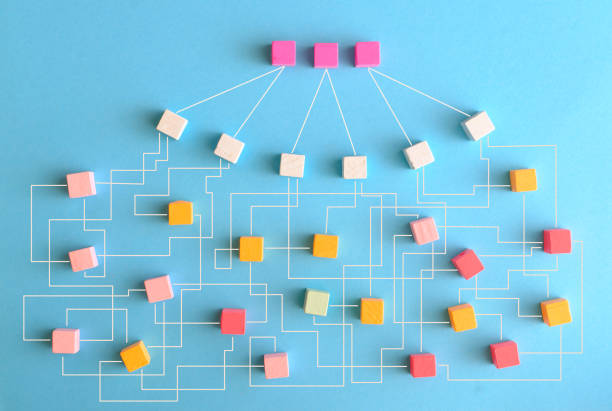
Launch day isn’t the finish line. For example, for neobanks, e-commerce platforms, and logistics providers, it’s actually where the real engineering begins. Once a system is live, it hits variables you can’t simulate in a lab: high-concurrency surges, erratic user behaviour, and data drift.
When a product fails post-launch, it’s rarely because the code “broke”. It fails because the design phase stopped while the usage phase was just starting. In 2026, “v1.0” is just a starting point. To survive, a platform has to move past one-time design choices and into systems that adapt in real-time.
The Mechanic Failure of Static Design
Most software projects stall because they treat design as a fixed-state deliverable. In a standard Agile methodology, we know that requirements evolve. Yet, many firms spend months building a feature set based on initial discovery, only to find that the moment $10,000$ concurrent users hit a high-traffic gateway, the friction points shift.
This isn’t just a “user preference” issue; it’s a mechanical bottleneck. User journey friction occurs when your conversion rate drops because the UI architecture didn’t account for real-world variables like mobile thumb reach or varying network latencies.

Without continuous design, these issues show up as design debt, a silent buildup of unresolved usability bugs that force engineering teams to waste sprint cycles refactoring the same components.
Treating UX Telemetry Like Server Logs
Continuous Design integrates UI/UX data directly into the Continuous Integration (CI) pipeline. We treat interface interactions with the same priority as server logs. A robust IT solution doesn’t just “make updates”; it ingests real-time heatmaps and event-stream data to recalculate the interface’s efficacy
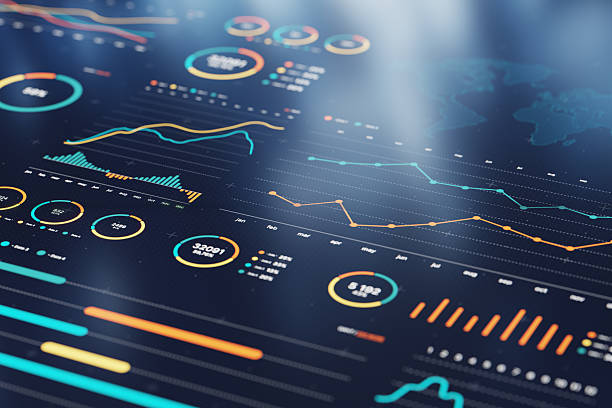
If a $200ms$ delay in a “Purchase” interaction correlates with a $15\%$ drop in conversion, we classify this as a design regression.
By treating the interface as a functional component of the technical stack, as Spotify and Netflix manage microservices, firms can reduce Customer Acquisition Costs (CAC) through automated, data-driven refinement.
Agile as an Execution Layer for Design
Continuous Design is only viable if the product management framework allows for rapid pivots. This is where Agile functions as the execution layer. Rather than monolithic redesigns, we isolate friction points (e.g., payment confirmation latency) and address them within a single sprint.
These improvements are managed as user stories tied to measurable technical outcomes:
“Metric: Ensure checkout completion within $3$ seconds under $4G$ network conditions ($<100ms$ interaction latency).”
Each update is treated as a hypothesis. A team might test whether reducing interaction latency from 300ms to 100ms improves conversion rates. The change is deployed, measured, and either validated or discarded based on real user data.
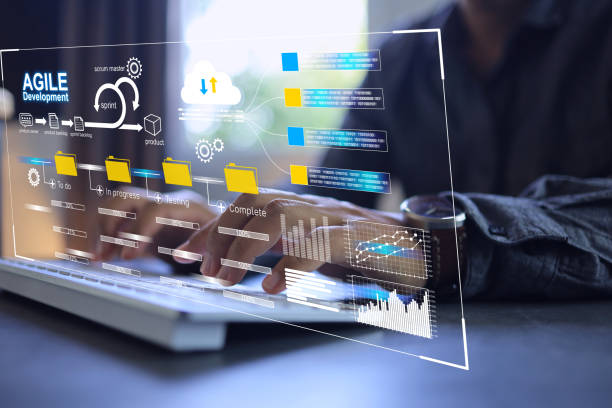
Short iteration cycles ensure that feedback is integrated continuously and not delayed until the end of development. And so success is no longer defined by feature completion but by measurable improvements in user behaviour, conversion rates, drop-off points, and task completion time.
Every release introduces new variables, performance issues, usability gaps, and unexpected edge cases. These are not failures, but signals. Continuous design, supported by Agile workflows, makes sure that these signals are identified early and resolved before they turn to systemic problems.
Atomic Systems: Designing for Infinite Scale
At scale, manual review is a bottleneck. High-growth platforms require Atomic Design Systems, component-based infrastructure that mirrors microservices architecture. By managing a library of “atoms” (standardised buttons, inputs, and nav elements), a team can deploy a global UI change in hours, not weeks.
To mitigate risk, we utilise feature flags. This allows for controlled stress testing on specific user segments, validating the design’s impact in a live environment before a full-scale continuous deployment (CD) rollout.

The Engineering of Product Longevity
Many SaaS products fail because the discovery process stops at launch. If you treat software as a static deliverable rather than a continuously evolving system, you’re inviting user detachment and a slow performance decline.
Reliability is not just about uptime. It is about how effectively a system adapts to change. Observability tools track user success metrics alongside system performance, ensuring that both technical and experiential issues are visible.
At its core, a product remains relevant when its design evolves at the same pace as its underlying systems. Continuous design is not an enhancement, it is a requirement for long-term product survival.